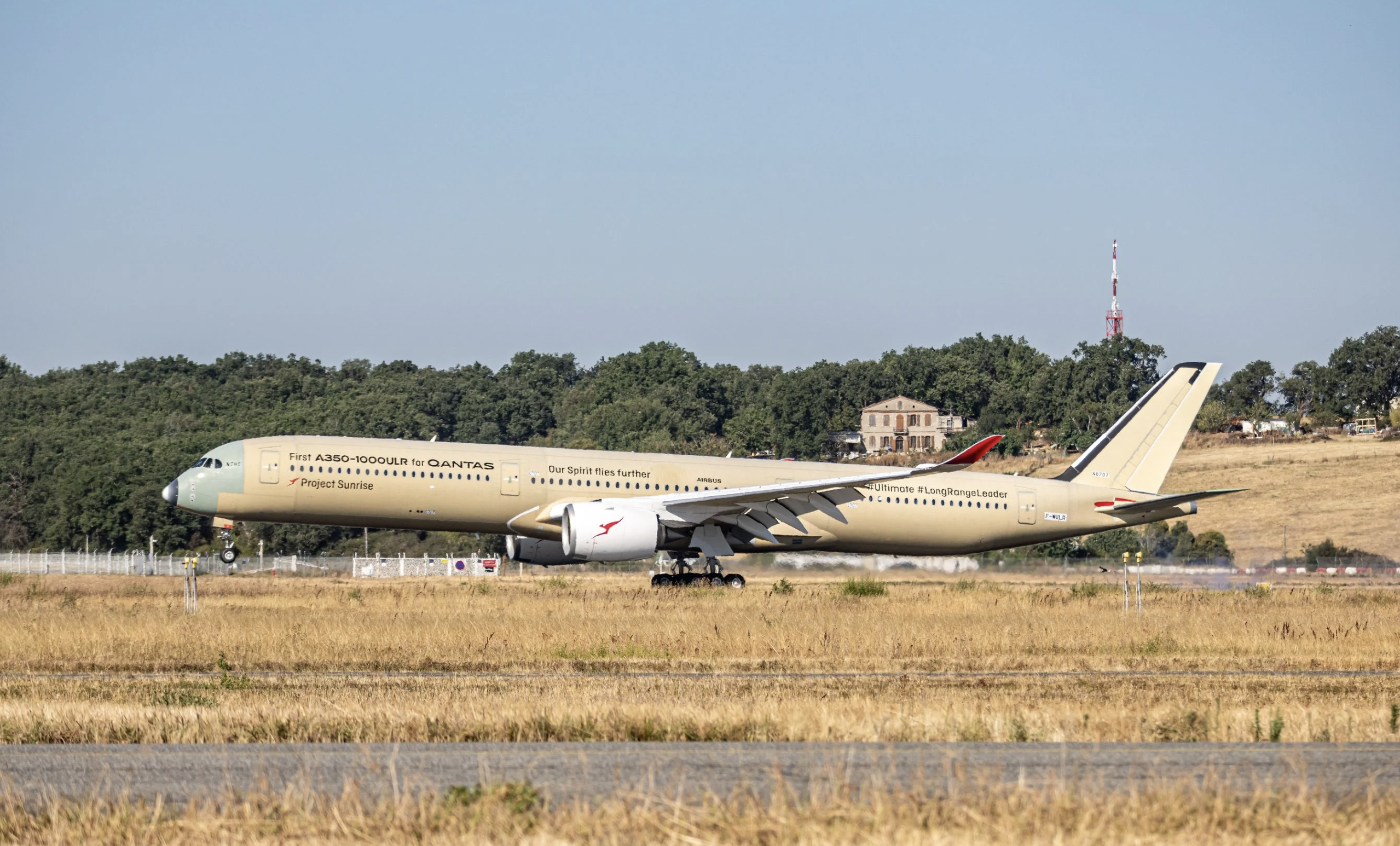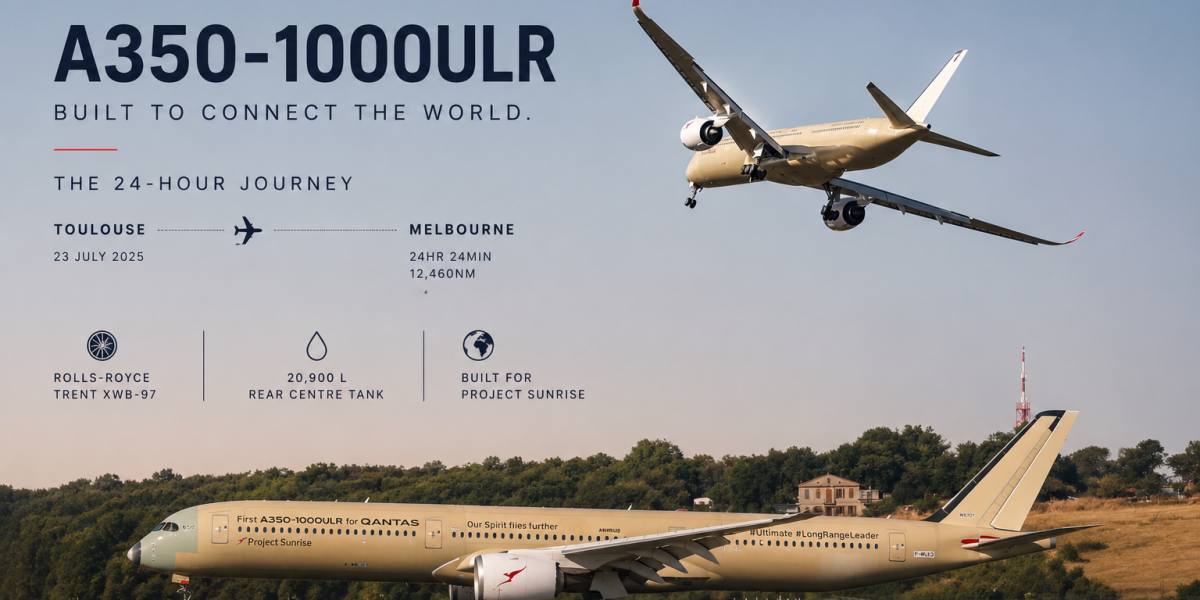
If you thought a long-haul flight was 12 or 15 hours, think again. On July 23, the first Airbus A350-1000 Ultra Long Range (ULR) flight test aircraft, known as MSN707, took off from Toulouse, France, and flew all the way to Melbourne, Australia—without stopping. Just a few days later, it made the return trip, arriving back in Toulouse on July 28. Seeing an aircraft stay in the air for over an entire day is honestly mind-blowing.
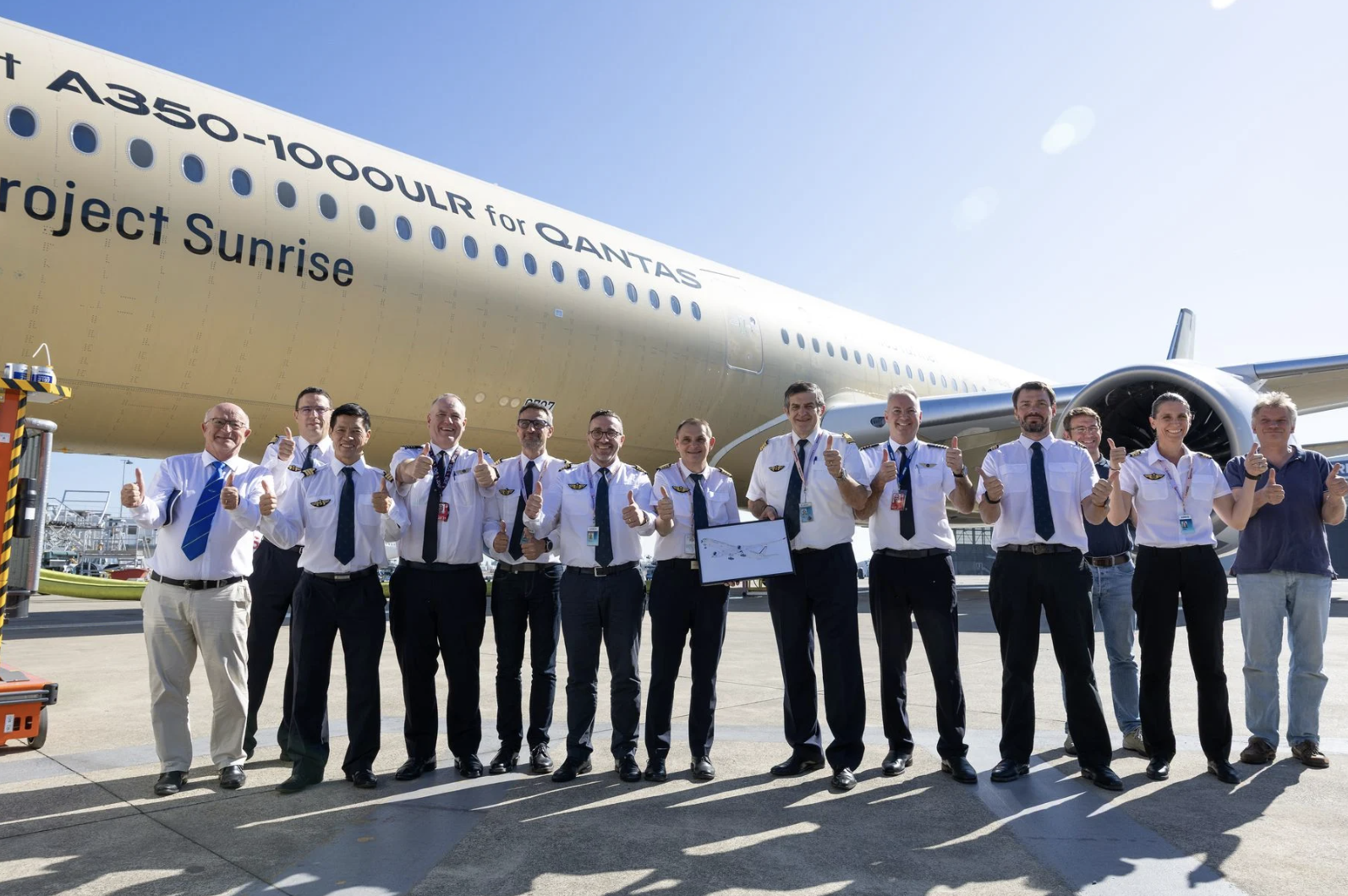
The aircraft had only made its first flight on June 2, so this was its biggest challenge yet. Instead of carrying regular passengers, it was packed with specialized test equipment that allowed Airbus engineers to monitor every part of the aircraft throughout the journey. This wasn’t just another test flight—it was a chance to prove that the A350-1000 ULR could handle some of the longest flights ever attempted.
The numbers are absolutely insane. The aircraft covered an incredible 12,460 nautical miles and stayed airborne for 24 hours and 24 minutes, making it the longest flight ever completed by an Airbus aircraft. Just imagine watching the sunrise, sunset, and then another sunrise again—all without leaving your seat.
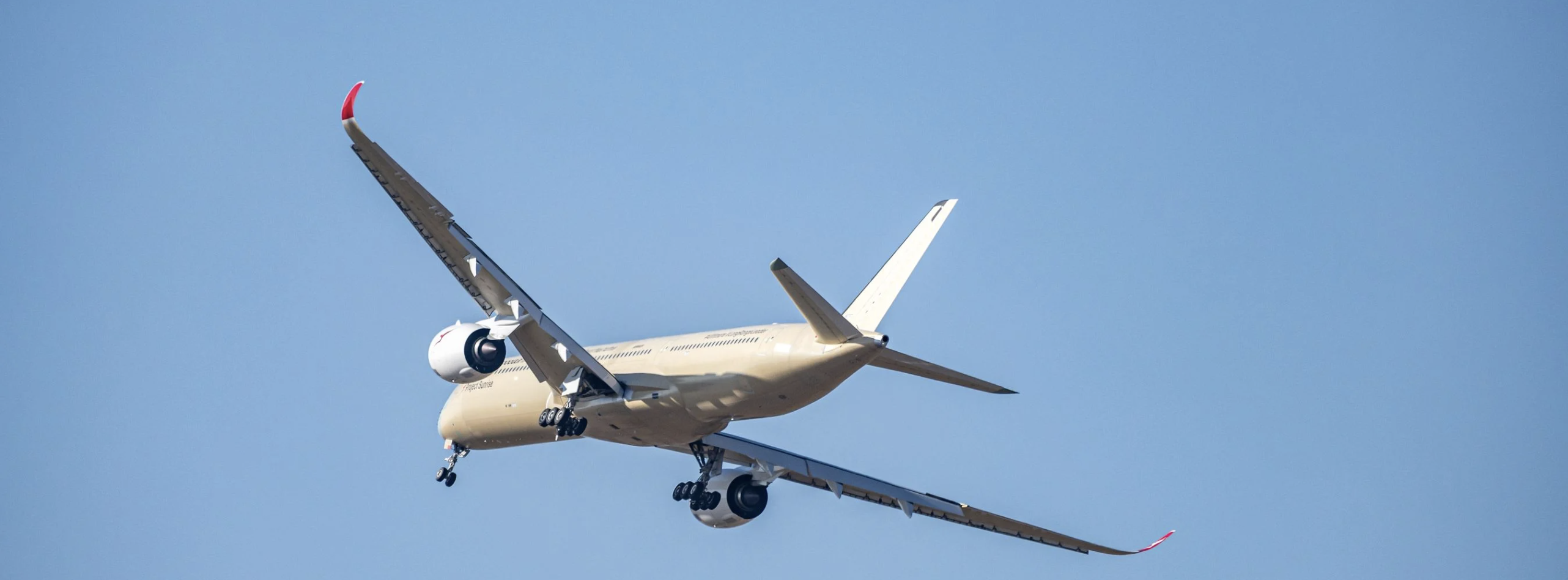
This mission wasn’t about breaking records for the sake of it. Airbus needed to show that the aircraft could comfortably complete a 23-hour block time, which includes everything from pushing back at the departure gate to parking after landing. That extra margin is important because Qantas plans to use this aircraft for Project Sunrise, where passengers could fly from cities like London or New York directly to Sydney in around 21 hours and 40 minutes.
One of the coolest parts of the aircraft is its additional Rear Centre Tank (RCT), which holds an enormous 20,900 litres of fuel. Combined with the incredibly efficient Rolls-Royce Trent XWB-97 engines, the A350-1000 ULR can fly close to 10,000 nautical miles without needing to refuel. That’s the kind of engineering that makes routes once considered impossible become a reality.
Airbus wasn’t only testing how far the aircraft could fly. Engineers were also making sure passengers would actually enjoy such a long journey. They monitored the air-conditioning system to keep the cabin comfortable throughout the flight and carefully tested the fuel management system to make sure fuel was transferred efficiently during every stage of the mission.
As someone who loves aviation, it’s amazing to think about how far we’ve come. Just over a century ago, powered flight lasted only seconds. Now we’re building aircraft capable of staying in the sky for more than 24 hours while crossing continents and oceans in a single trip. The A350-1000 ULR isn’t just another airplane—it’s proof that aviation keeps finding ways to push beyond what once seemed impossible. I genuinely can’t wait to see Project Sunrise become a reality.